
Domaine Pavelot Savigny Les Beaune 2017 and 2019 Vintage Offering and all the Savigny Les Beaune in the store on SALE!!

"The First Duty of wine is to be Red...the second is to be a Burgundy"
Harry Waugh
And I love a lighter red for the summer months these 2017 vintage wines from Burgundy are already drinking nicely with the entry level village wines like these first two from Domaine Pavelot a great choice to pop and pour with a slight chill as the sun goes down.
The 2019’s are another story these are wines that will age in your cellar for decades as we just served a 1979 vintage Savigny Les Beaune village wine at our vintage Burgundy tasting a week ago and it was still beautiful. Everyone thinks Burgundy is ridiculously priced but with over 600 different named wines you are sure to find some great values like in Savigny Les Beaune.
I will never forget the 1969 vintage Savigny Les Beaune that I purchased to celebrate my 40th B-Day from Maison Leroy. This was long before this legendary Burgundy negociant made any Domaine wines and this wine probably came from a small Domaine like Pavelot. It was amazing how fresh and lively this 40 year old village Savigny Les Beaune was drinking. I continued to drink this wine for the next decade and the last bottle went down just before my 50th B-day and it was on the table with other wines from Leroy and DRC. Amazing this wine still belonged in the company of the other wines which were much more expensive.
Check out this trio of Savigny Les Beaune from Domaine Pavelot and if you want to become even more familiar with Savigny Les Beaune I have included all the Savigny Les Beaune that we have in the store at the end of this offering.
Super Savigny Les Beaune SALE !!
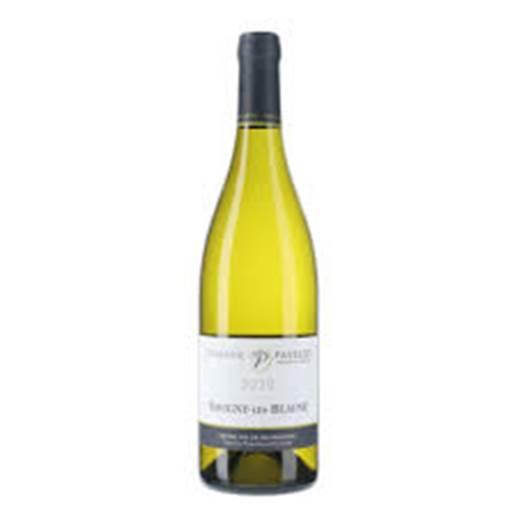
2019 DOMAINE PAVELOT SAVIGNY LES BEAUNE BLANC
Price: $35.00 Your Price: $30.80 Quantity in Stock: 24
A suggestion of the exotic can be found on the spiced green apple, jasmine tea, passion fruit and soft lemon-lime scents. There is fine richness and intensity to the caressing yet reasonably precise flavors that terminate in a clean, dry, crisp and citrusy finale. Burghound
2019 DOMAINE PAVELOT SAVIGNY LES BEAUNE LES PEUILLETS 1ER CRU
Price: $55.00 Your Price: $48.40 Quantity in Stock: 29
"Discreet wood sets off more elegant aromas of floral, especially violet, and spice nuances on the plum and dark raspberry scents. The attractively energetic and caressing middle weight flavors possess solid mid-palate density and a refreshing salinity on the firm, serious and built-to-age finish. This is an unusually structured example of Peuillets and one that is going to require at least a few years of forbearance. Drink: 2029+. (Apr 2021)" 89-91 points Allen Meadows (Burghound)
2019 DOMAINE PAVELOT SAVIGNY LES BEAUNE GUETTES 1ER CRU
Price: $60.00 Your Price: $52.80 Quantity in Stock: 30
Here too there is a mentholated top note present on the more sauvage and forest floor nuanced aromas of red and dark currant. I very much like the sense of underlying tension suffusing the even more mineral-driven middle weight flavors that coat the palate with dry extract that buffers the very firm tannic spine shaping the beautifully long finale. This serious, austere and compact effort is quite tightly wound and a wine that is unlikely to make for especially interesting drinking young; then again, textbook Guettes rarely does. Burghound 91-93 Sweet Spot Outstanding!
2019 DOMAINE PAVELOT LA DOMINODE SAVIGNY LES BEAUNE 1ER CRU
Price: $60.00 Your Price: $52.80 Quantity in Stock: 42
A perfumed, ripe and cool nose features notes of red currant, black raspberry, violet and a hint of sandalwood. There is very fine mid-palate density with an abundance of sappy dry extract to the velvety and mouth coating flavors that flash good minerality on the powerful, balanced and hugely long finish. This is marvelous but it's also a buy and forget you own it wine. Burghound 92-94 Sweet Spot Outstanding
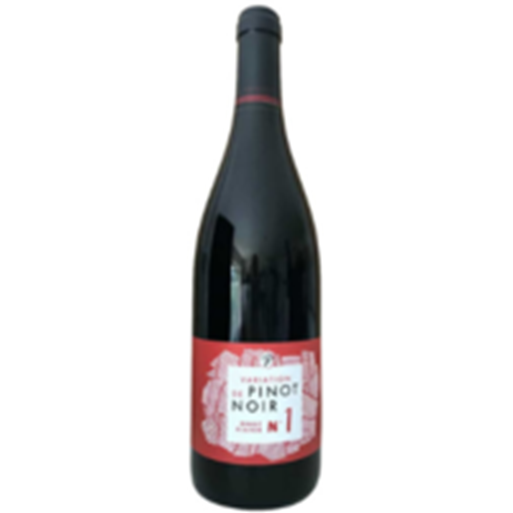
2017 Domaine Pavelot Savigny Les Beaune Plaisir
Price: $32.25 Your Price: $28.38 Quantity in Stock: 47
This fun little number with Pinot Noir on the label is made with fruit exclusively from Savigny-Lès-Beaune, and some of the fruit is also from old vines. A beautiful "everyday" Burgundy of excellent quality at under $30 per bottle! The vintage and the house style show clearly in this wine. It gives lots of forward and pure red berry fruit on the nose with hints of fresh earth, flowers and some exotic spice here - a classic Burgundian scent. One the palate this wine is clean and has delicious red berry fruit with good depth and complexity for a wine at this price. Finish 35+ Very Good +
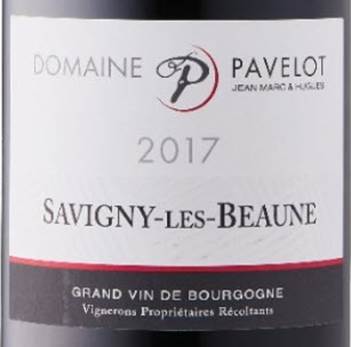
2017 Domaine Pavelot Savigny Les Beaune
Price: $39.75 Your Price: $34.98 Quantity in Stock: 47
The 2017 Savigny-lès-Beaune Village has a similar nose to it but with a bit more concentration and a bit more pure raspberry fruit with pretty floral notes and some earth tones but lots of forward seductive fruit. A medium-bodied wine with beautiful forward fruit some tannins here on the finish and a lovely fresh finish. You can drink this now, it’s even better with a few hours in the decanter and it should age nicely in the cellar for at least five to seven years. Finish 40+ Excellent
2017 Domaine Pavelot Savigny Les Beaune Les Peuillets 1er Cru
Price: $55.00 Your Price: $48.40 Quantity in Stock: 7
A very seductive bouquet of wild strawberry like fruit with smoky earthy notes, exotic spices and pretty floral notes on the nose opens up nicely in 30 minutes. Smooth and silky on the tongue with bright red berry fruit and a firm hand of acidity holding things together nicely with some tannins on the finish well built with exptic spice, that smoky earthy character lingering through the finish, good length and complexity to the end. This wine will age for 10+ years in the cellar easily but is quite approachable now. Finish 45+ Excellent +
A bit about the Domaine Pavelot:
For several generations, the DOMAINE Jean-Marc and Hugues Pavelot located in Savigny-les-Beaune (Côte de Beaune, Burgundy) has been handed down from father to son, thus guaranteeing the know-how that has made its reputation.
Today, the property extends over 13 hectares, mainly in the commune of Savigny-les-Beaune but also in that of Beaune and Aloxe-Corton.
Our production will allow you to discover a dozen wines with very varied typicity. These differences are closely linked to the notion of terroir, a feature of Burgundian viticulture. Each name or climate is therefore the expression of a rather complex association between the geology of the place, its topography and even its history.
This diversity is very present in the vineyard of Savigny-les-Beaune which covers two hills and the valley which connects them. Its altitude is between 220 and 360 meters. The nature of the soil is very varied and its exposure is oriented south, south-east and north-east.
Pinot Noir for the reds and Chardonnay for the whites are the exclusive grape varieties of our great Burgundies.
Our operation of the vine (perennial culture) aims to produce beautiful mature grapes, intended for obtaining high quality wines. It is a short and long term issue.
In the short term, the assurance of a good harvest is based on various reasoned works, with significant qualitative implications.
In the long term, the objective is to keep our vines in good health to ensure their longevity. At the estate, some plots reach the very respectable age of 80 years (Gravains, Dominode, etc.).
During the year, we perform various manual and mechanical work. These depend on agronomy and climatic conditions. They can be summarized as follows:
Following the natural grassing that set in in the fall and that lasted throughout the winter, the soils are reworked in the spring and maintained throughout the summer by regular plowing.
The protection of the vineyard is part of a reasoned pest management program.
The essential yield control is achieved through restrictive pruning, targeted and limited organic fertilization, serious disbudding and is supplemented, if necessary, by green harvesting.
At the Domaine, the harvest is done manually at good maturity, a first sorting of the harvest being carried out in the vineyard.
The origin of the grape is a reflection of its terroir. The aim of vinification is therefore to optimize each of them.
Vinification for red wines:
After picking, the harvest is quickly returned to the winery where it is once again sorted. The grapes are then destemmed, entirely for the Village appellation as well as the vast majority of the premiers crus, but can be partially destemmed for the 1 er cru Dominode.
Then the harvest is placed in vats and cooled to 12 ° C for a cold pre-fermentation maceration of 3 days. Then, the must warms up naturally thanks to the ambient temperature of the winery. Therefore, the yeast flora comes into action for a slow and gradual start of fermentation.
Alcoholic fermentation takes place under temperature control with regular punching down (1) at the start of the process and then fairly quickly the first pumping over (2) , which will almost exclusively accompany the end of the sugars.
Traditionally, vatting lasts an average of 15 days for Savigny village and 15 to 19 days for 1er crus.
The end of vatting is an important stage which foreshadows the character of the future wine. This is a period under close surveillance with regular tastings which allow a date for devatting to be established. The maximum amount of juice is then drawn off; it is said to be free-run juice. The rest is devatted and pressed; the resulting juice, known as press juice, is fractionated, tasted and blended with free-run juice if its organoleptic characteristics seem beneficial to the wine.
The cuvée is thus established!
The production of white wines:
After the harvest, the grapes are immediately pressed. The grape juice obtained is clarified and then placed in a vat where it will begin its alcoholic fermentation. A few days later, the fermenting juice is put in barrels to complete the transformation of the sugars into alcohol. This process is long (6-8 weeks), delicate and therefore very supervised. During this stage, each barrel is regularly stirred (3) to keep the yeasts in full activity. Once the alcoholic fermentation is finished, the wines will see the malolactic fermentation set in fairly quickly. They will stay on the lees for 10 to 12 months.
(1) Pigeage: manual operation aimed at mixing the solid part of the must (marc) and its liquid part (juice) in the tank in order to optimize the extraction of aromatic compounds, color and tannins
(2) Reassembly: operation consisting in recovering the must during fermentation accumulated in the bottom of the tank to pour it back onto the cap of marc which floats on the surface and thus moderately extract the phenolic compounds.
(3) Operation consisting in stirring the fine lees of the wine to resuspend them during vinification. This operation was traditionally carried out using a stick, hence its name. The stirring nourishes the wine, giving it fat and volume. It resuspends the yeasts, intensifies their activity to carry out slow fermentations.
After settling (1) for 24 to 48 hours, the new wine is put in barrels. Aging in oak barrels (10-30% new barrels depending on the vintage) will be 10 to 12 months for the village and 12 to 14 months for the premiers crus.
The malolactic fermentation, traditional in Burgundy, which results in the maturation of the wine, will take place in spring when the cellar warms up.
The wines are aged on lees and then racked in order to be unified by appellation for bottling. They can however be kept in vats for a few more months.
Bottling will take place after a period of aging which will vary depending on the vintage from 12 to 14 months for the village and from 14 to 16 months for the vintages.
If necessary, the wines will be filtered and finally bottled by us.
- Settling: operation consisting in statically separating the lees and other suspended matter which can give a bad taste to the wine.
2019 Vintage Report from Burgundy:
By Jancis Robinson
Louis-Michel Liger-Belair of Vosne-Romanée, who sees 2019 as ‘like 2009 but with better acidity’, remarked that they usually make their allocations in March and in previous years have been swamped by emails and calls from potential purchasers anxiously enquiring how many bottles they should expect. This year that didn’t happen. And the fact that Domaine du Comte Liger-Belair used to sell 40% of its wine to restaurants, now shuttered or shattered, has also forced a change in the way it sells its burgundies, costing up to £4,500 a bottle. ‘We’ve moved from collectors in their seventies to thirty- to forty-year-olds who have a wine fridge and buy only here and there. DTC [direct to consumer] is so much more important now, and our sales network could be global. We were already working on it but COVID has pushed us to accelerate that programme.’
The well-travelled Liger-Belair is already selling more proactively than most of his peers. The wine that he had deliberately kept back to see in the important shop window that is a top restaurant’s wine list, he is releasing to restaurants straight from his cellar as mature bottles, with perfect provenance, in threes or sixes. In order to discourage them from reselling the bottles on the open market, the restaurants have to send back the corks in order to get replacements. The scheme is so far confined to France but Liger-Belair may extend it.
He is currently offering his 2012s to restaurant customers – not exactly fully mature but at least more evolved than most burgundies you find on restaurant wine lists, even in Burgundy itself. Alex Moreau of Domaine Bernard Moreau in Chassagne bemoaned to me the fact that ‘people don’t know what mature burgundy tastes like nowadays. You go to restaurants in Beaune and there is just 2016 and 2017 on the wine lists.’
But what is 2019, the vintage that will be offered soon, like? I loved most of the wines I tasted – but then I tasted almost exclusively at the best addresses. The wines were charming, full of fruit yet with great energy too. A warm 2019/2020 winter possibly hastened the development of the 2019s languishing in barrels in the cellars of the Côte d’Or. They are the product of a particularly hot summer – even hotter than 2020, even if not as dry and not as early-picked – so it’s a bit of a mystery how they seem to have hung on to the acid levels which usually plummet in the heat.
When I discussed 2019 with the talented micro-négociant Benjamin Leroux he asked rhetorically, ‘why did they keep their freshness, especially the whites, that seemed to cope with the heat super-well. For the moment I have no idea.’ The general theory is that everything, including acidity, was concentrated in the distinctly non-juicy grapes that characterised 2019.
His whites were exceptionally successful and if I absolutely had to say which colour I favoured in 2019 on the basis of all the wines I have tasted so far, I would probably say – extremely reluctantly – white, whose yields were generally much lower than the reds, often shrunk by frost. But Meursault classicist and white-wine specialist Jean-Marc Roulot confessed he was no great fan of the 2019s, which he likened to 1990s – ‘too rich’.
On the other hand, his great friend and neighbour Dominique Lafon seemed delighted by how approachable the 2019s are and caricatured British burgundy lovers who always seem deeply suspicious of any young wine that tastes good. And it’s true that some 2019 reds will strike some palates as too sweet.
This may well not be the longest-lived vintage – but then, as Moreau pointed out, demand means that burgundy is being drunk younger and younger anyway. No one I spoke to thought that the 2019s would close down and go through the sullen phase that can bedevil some vintages.
More good news. As Freddy Mugnier of Chambolle-Musigny observed happily, ‘we’ve eliminated mediocre wine – the average quality is so much higher than it used to be’. I would concur, and I would also suggest that the biggest improvement has been at the bottom end of the quality and price range. I lost count of the delicious 2019s carrying the lowly Bourgogne appellation that I tasted, and these seemed so much better value than the grands crus that demand three- or even four-figure sums per bottle and many a long year of ageing.
Read More at:
2019 burgundy – what to buy | JancisRobinson.com
A bit about the 2017 vintage from Burgundy as published in Decanter magazine.
Burgundy 2017: When Côte d’Or prayers were answered?
By: William Kelley September 20, 2017
It's been a rollercoaster, but 2017 could be the biggest overall crop since 2009. Can quantity combine with quality? William Kelley gives his initial view on how the Burgundy 2017 vintage looks after spending September in the region and following the harvest.
Along the Côte d’Or, the sound of honking horns and cheering pickers announces that the Burgundy 2017 harvest is coming to an end.
After a succession of meagre years, beset by hail, rot and frost, nature has finally answered growers’ prayers, delivering a plentiful crop to equal or surpass the volumes achieved in 2009, the region’s last abundant vintage. After the gloom of 2016, a year ravished by the worst frosts since 1985, spirits this year are buoyant and the atmosphere cheerful.
burgundy 2017, pinot noir
The vintage’s signature: a heavy crop of Pinot Noir in Volnay Santenots. Credit: William Kelley.
At domaines with empty cellars and correspondingly depleted coffers, 2017’s bounty may prove of truly existential importance.
‘We’re thankful’, confesses Cyril Audouin, whose Marsannay vineyards were ravished by frost in 2016. ‘Everyone in the Côte d’Or is smiling this year’, agrees Véronique Drouhin: ‘it’s so nice to have full fermenters!’ Moreover, with such an abundance of wine now waiting in the wings, it is to be hoped that the pressure to increase prices for the 2016 vintage will be less keenly felt.
A complex growing season may be briefly summarized. When frosts threatened in April, growers determined not to relive the heartbreak of 2016 banded together, burning bales of straw to ward off the cold.
Only Chablis was less fortunate. As William Fèvre’s Alain Marcuello told Andrew Jefford, ‘the problem in Chablis is that the frost went on for 15 nights. Most growers ran out of frost candles after five days; there were none left anywhere in Europe by the end.’
Hot weather followed hard on the heels of the April chills, in some instances disrupting flowering, as Jacques Carillon reported in his Puligny-Montrachet premier crus. The summer’s heat also stressed the vines, sometimes shriveling berries and retarding physiological ripening.
Hail on 10th July, its impact largely confined to Morey-Saint-Denis, damaged grapes. Then, in late August, much needed rain brought relief, helping vines to bring their fruit to fuller maturity.
Burgundy 2017 harvest report
Grand Echézeaux, Echézeaux and the Clos Vougeot after a light shower during harvest. Credit: William Kelley.
By late August and early September, harvesting had begun. Arnaud Ente in Meursault, generally one of the region’s first to pick, started on 25 August, and by 1 September the Chardonnay vintage was well under way in both the Côte de Beaune and the Mâconnais.
With rain forecast at the end of the week, the first reds were picked around the same time, Charles Lachaux of Vosne-Romanée and François Millet of Chambolle-Musigny’s Domaine Comte de Vogüé both beginning on 2 September. Others chose to wait, Sebastien Cathiard only beginning two weeks later, and the Domaine Ponsot finally getting underway on 19 September.
As ever, deciding when to harvest was a delicate matter: rain did indeed transpire on 9 September, continuing on-and-off for the following week. ‘If we could have counted on good weather, I’d have waited’, reflected Jeremy Seysses of Domaine Dujac.
Some of those who did wait were bullish, others regretful. At many addresses, difficulties in finding pickers brought further complications: ‘the French don’t want to do the work anymore’, was a common complaint.
burgundy wine press
Frédéric Lafarge presses his Volnay Clos du Château des Ducs the old-fashioned way. Credit: William Kelley.
Along the Côte d’Or, the crop was plentiful and generally healthy. Vines touched by frost the year before tended to give especially generous, sometimes excessive, yields: rumors of 100 hl/ha in parts of the Côte de Beaune, well in excess of the appellation limits, should give pause.
Skins were thick, thanks to the summer heat, and generally well-developed, reminding Cécile Tremblay of 2010, but seeds and stems were more unevenly ripe. Sugars, diluted by rain, were seldom especially high, and many producers will need to chaptalise.
Further north, growers in Chablis seem delighted with the grapes that were spared by the April frosts.
What can we expect from the wines? It’s too early to have much sense of their character, and on the red side of the ledger, the vintage suggests comparatively few analogies, the cool harvest weather, punctuated by showers, having put paid to any premature comparisons with 2009.
It will be distinctions between producers that make all the difference
Some, including Jadot’s Pierre Henri Gagey, tentatively invoke the red wines of 1999.
It certainly seems probable that the 2017 vintage, like 1999, will test the compatibility of quality and quantity. Low yields, argues Loïc Dugat-Py of Gevrey-Chambertin, were the secret to attaining full ripeness and retaining acidity, a contention that was frequently seconded along the Côte.
Over-cropped Pinot Noir may be supple and easy drinking, but it is unlikely to be either profound or age-worthy. If 2016 was a vintage where the weather drew stark contrasts across the Côte d’Or, ravaging some appellations but sparing others, 2017 has been even-handed: it will be distinctions between producers that make all the difference.
Chardonnay, more tolerant of high yields, is likely to prove a more forgiving medium than Pinot Noir, and expectations for the 2017 whites are high.
With its early start, the year presents easier analogies, superficially evoking 2015. ‘On paper, the two are similar’, admits Jacques Carillon, ‘but I suspect the wines will be very different’.
Vincent Dancer of Chassagne-Montrachet sees signs of ‘the volume of 2015 with the acidity of 2014’, a happy union, pointing to the musts’ good levels of malic acidity.
Further south, Vincent Dureil, Rully superstar, is similarly gratified by the wines’ early balance. ‘A very special vintage’, concludes an optimistic Pierre Yves Colin—and indisputably, we may add, a timely one." Decanter
Read more at https://www.decanter.com/wine/wine-regions/burgundy-wine/burgundy-2017-harvest-report-william-kelley-376805/
The rest of the Savigny Les Beaune in the store:
1979 DOMAINE CHRISTIAN BONNOT SAVIGNY LES BEAUNE NO LABEL
Price: $105.00 Sale Price: $85.00 Quantity in Stock: 1
2016 ALEX GAMBAL SAVIGNY LES BEAUNE ROUGE MAGNUM
Price: $85.00 `Your Price: $74.80 Quantity in Stock: 18
2017 ALEX GAMBAL SAVIGNY LES BEAUNE GRANDS PICOTINS MAGNUM
Price: $125.00 Your Price: $110.00 Quantity in Stock: 5
2019 DOMAINE RAPET PERE ET FILS AUX FOURNAUX SAVIGNY-LES-BEAUNE, FRANCE
Price: $45.00 Your Price: $39.60 Quantity in Stock: 16
2019 BOUCHARD PERE ET FILS SAVIGNY LES BEAUNE LES LAVIERES
Price: $69.75 Your Price: $61.38 Quantity in Stock: 3
back