2022 Domaine de La Vougeraie Clos Vougeot Grand Cru
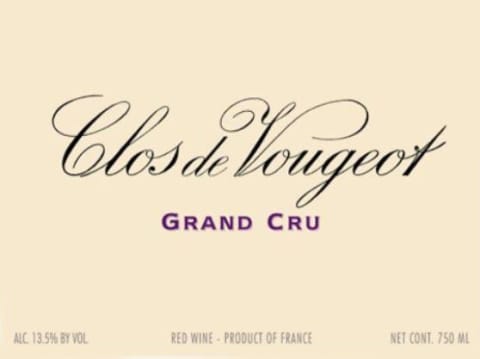
When Martine saw a barrow load of bottles wheeled into the kitchen, she stood still. She touched the bottles and lifted one up. “What is there in this bottle, Babette?” she asked in a low voice. “Not wine?” “Wine, Madame!” Babette answered “No, Madame. It is a Clos de Vougeot 1846!” Karen Blixen, in Babette’s Feast, has captured the essence of Clos de Vougeot. It is not just a wine, but an emotion, a presence, an event... .
HISTORY
When Cîteaux Abbey was founded in 1098, the first monks were also given some land nearby. The Clos de Vougeot was planted shortly afterwards, in 1110. At this time Saint Bernard was tracing the outlines which gave the Cistercian order recognition throughout Christendom. This vineyard thrived under the Cistercian tonsure for 680 years, becoming an ideal present to obtain favours from popes or kings! The second chapter of the Clos’ history lasted a hundred years. Under the Phrygian cap, it was considered as national property and sold to dignitaries by the Revolution. Julien-Jules Ouvrard, son of a famous Napoleonic war financier, owned it from 1818 to 1861. The Clos was inherited by his children, married into the Rochechouart and Montalembert families, before being sold to six local wine merchants in 1889. Since then the parcels have been divided many times, but the Clos de Vougeot remains the true heart of Burgundy wine. In around 1550 the 48th Abbot of Cîteaux, Jean Loisier, built the Château at the centre of the Clos. Inspired by the Renaissance, its square towers are clearly reminiscent of the Middle Ages. Elegant and functional, as it also serves as a vat room and cellar, the Château du Clos de Vougeot is simply exceptional – nothing ostentatious, but truly inspired. The chateau has been the seat of the Confrérie des Chevaliers du Tastevin since 1945, making it the best table d’hôte in France. Clos de Vougeot is both a vineyard and a wine, a historic monument and a certain image of France. Extending the universal spirit of Cîteaux, the Confrérie des Chevaliers du Tastevin is open to the world. This temple of wine is a work of patience, resplendent after nearly a millennium of human effort and nature’s graces. Léonce Bocquet (1839-1913) owned the château and some fifteen hectares in the Clos. Responsible for the restoration of the château, he was a man of great panache. When the Grand Marshal of the court of Hohenzollern, after spending three days tasting the Clos’ wine, ordered 200 bottles, he replied, “Tell your Emperor that I will not invoice a mere 200 bottles. I offer them”. Léonce Bocquet is buried in front of the château.
List Price: $513.00
Not in Store: Available in 5 - 7 days
add to cart continue shoppingCart Summary
Your shopping cart is empty!
Wine Watch Events
Brigaldara Amarone Della Valpolicella Wine Tasting with Special Guest Antonio Cesari
Wed, Mar 18, 2026
“The only way of rendering life endurable is to drink as much wine as one can come by.”...
Vintage Brunello di Montalcino Wine Tasting back to 1979
Thu, Mar 19, 2026
I like to drink wine more than I used to... Don Corleone, The Godfather Th...
Wine Cave is Available for a Private Dining Experience
Thu, Mar 19, 2026
We have a minimum of 6 people to reserve the table in the Cave but we will take up to 16&n...
Wine Cave is Available for a Private Dining Experience
Fri, Mar 20, 2026
We have a minimum of 6 people to reserve the table in the Cave but we will take up to 16&n...
Williams Selyem California Chardonnay and Pinot Noir Wine Tasting
Fri, Mar 20, 2026
Be careful to trust a person who does not like wine. Karl Marx I will have to agree wit...
Wine Cave is Available for a Private Dining Experience
Sat, Mar 21, 2026
We have a minimum of 6 people to reserve the table in the Cave but we will take up to 16&n...
Sine Qua Non California Rhone Wine Tasting
Sat, Mar 21, 2026
"I think it is a great error to consider a heavy tax on wines as a tax on luxury. On the c...
Wine Bar is Booked for a Private Event
Thu, Mar 26, 2026
Wine Bar is Booked for a Private Event- Whitmann
Hourglass Winery Napa Valley Wine Tasting with Special Guest Tony Biagi
Thu, Mar 26, 2026
Hourglass Winery Napa Valley Wine Tasting With Special Guest Winemaker Tony Biagi ...
Wine Cave is Available for a Private Dining Experience
Fri, Mar 27, 2026
We have a minimum of 6 people to reserve the table in the Cave but we will take up to 16&n...